iti
15 April 2025
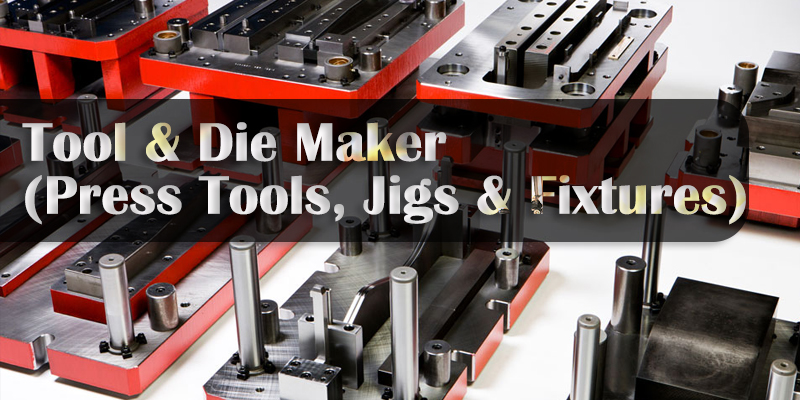
ITI Tool & Die Maker (Press Tools, Jigs & Fixtures) Syllabus (English)
Course Overview
- Trade Name: Tool & Die Maker (Press Tools, Jigs & Fixtures)
- Duration: 2 Years (4 Semesters)
- NSQF Level: Level 5
- Eligibility: 10th Grade Pass with Mathematics and Science
- Objective: To train candidates in designing, manufacturing, and maintaining press tools, jigs, and fixtures, equipping them for roles such as tool and die makers, press tool setters, or jig/fixture fabricators in manufacturing industries, or for self-employment in tool-making workshops.
- Certification: National Trade Certificate (NTC) by NCVT
Detailed Syllabus
Semester 1
Trade Theory
- Introduction to Tool & Die Making: Role of press tools, jigs, and fixtures in manufacturing; industry applications (automotive, aerospace).
- Engineering Materials: Properties of steel, cast iron, non-ferrous metals; heat treatment processes (annealing, hardening).
- Measuring Instruments: Vernier calipers, micrometers, dial indicators, gauge blocks; calibration techniques.
- Hand Tools: Files, hacksaws, chisels, hammers; proper usage and maintenance.
- Safety Practices: Workshop hazards, PPE (gloves, goggles), machine guarding, fire safety.
- Basic Machining: Principles of turning, drilling, grinding; lathe and drilling machine components.
- Workshop Organization: Tool storage, 5S methodology, workflow planning.
Trade Practical
- Measurement Practice: Using vernier calipers, micrometers, and height gauges for precise measurements.
- Hand Tool Skills: Filing, sawing, chipping, scraping; achieving flat surfaces.
- Bench Work: Marking, punching, and layout preparation on metal workpieces.
- Lathe Operations: Plain turning, step turning, facing, drilling; setting workpieces.
- Safety Drills: Practicing PPE usage, machine isolation, emergency response.
- Grinding: Sharpening tools using pedestal grinders; checking angles.
- Project Work: Fabricating a simple component (e.g., washer) using lathe and hand tools.
Hours: Theory: 160 hours | Practical: 240 hours
Semester 2
Trade Theory
- Lathe Operations: Taper turning, thread cutting (metric, Whitworth), knurling; calculations for gear trains.
- Milling Machines: Types (horizontal, vertical), cutters, indexing methods, dividing heads.
- Press Tools Basics: Types (blanking, piercing, bending), components (punch, die, stripper).
- Jigs and Fixtures: Definitions, types (drill jigs, milling fixtures), design principles.
- Fasteners and Fits: Bolts, nuts, screws; types of fits (clearance, interference).
- Metrology: Surface finish, tolerances, limit gauges, inspection techniques.
- Heat Treatment: Tempering, quenching, case hardening; effects on tool life.
Trade Practical
- Advanced Lathe Work: Taper turning (internal/external), thread cutting, eccentric turning.
- Milling Operations: Slab milling, slot cutting, keyway milling; using dividing head.
- Press Tool Components: Filing and grinding punch and die blanks to size.
- Jig Assembly: Assembling a simple drill jig; aligning bushings.
- Inspection: Measuring tolerances with plug gauges, slip gauges; surface plate work.
- Heat Treatment: Hardening and tempering small tool steel components.
- Project Work: Manufacturing a simple blanking die with punch and die set.
Hours: Theory: 160 hours | Practical: 240 hours
Semester 3
Trade Theory
- Advanced Press Tools: Progressive and compound dies, clearance calculations, strip layout.
- Jigs and Fixtures Design: Locating, clamping, guiding elements; modular fixturing.
- CNC Machining: Basics of CNC lathe and milling, G-code, M-code, tool offsets.
- EDM and Wire EDM: Principles, applications in die making, electrode materials.
- Hydraulics and Pneumatics: Basic circuits, actuators, valves in tool automation.
- Tool Maintenance: Wear analysis, regrinding punches, die sharpening.
- Quality Control: Statistical process control, defect analysis, ISO standards.
Trade Practical
- CNC Operations: Setting and programming CNC lathe/milling for tool components.
- EDM Practice: Machining die cavities using spark erosion; preparing copper electrodes.
- Progressive Die: Manufacturing components for a progressive die (e.g., stripper plate).
- Jig/Fixture Fabrication: Building a milling fixture with clamps and locators.
- Hydraulic/Pneumatic Circuits: Assembling basic circuits for press tool automation.
- Inspection: Checking die alignment, punch clearance using gauges.
- Project Work: Constructing and testing a progressive die for a simple component.
Hours: Theory: 160 hours | Practical: 240 hours
Semester 4
Trade Theory
- Complex Tooling: Draw dies, forming dies, combination tools; material selection.
- Automation in Tooling: Role of sensors, PLCs, and robotics in press tool systems.
- Tool Repair: Overhauling dies, welding cracks, reconditioning jigs/fixtures.
- Production Management: Tool tryouts, cycle time optimization, lean manufacturing.
- Entrepreneurship: Starting a tool-making workshop, costing, market analysis.
- Industry Trends: Industry 4.0, additive manufacturing in tooling, smart factories.
- Environmental Safety: Waste disposal, coolant recycling, emission norms.
Trade Practical
- Complex Die Making: Fabricating a forming die or draw die; testing for accuracy.
- Tool Repair: Welding and regrinding worn punches, dies; restoring fixtures.
- Automation Skills: Integrating sensors into a press tool setup; basic PLC programming.
- Industrial Exposure: Hands-on training in tool rooms or manufacturing units (4-6 weeks).
- Production Trials: Conducting tool tryouts, adjusting clearances, optimizing output.
- Quality Assurance: Inspecting finished tools for defects, dimensional accuracy.
- Project Work: Designing and building a compound die or milling fixture, with full testing.
Hours: Theory: 160 hours | Practical: 240 hours
Additional Components
- Workshop Calculation and Science
- Calculations: Gear ratios, cutting speeds, die clearances, strip layout optimization.
- Science: Mechanics (stress, strain), metallurgy, fluid dynamics in hydraulics.
- Hours: 80 hours/year
- Engineering Drawing
- Reading and creating blueprints for press tools, jigs, fixtures; sectional views, tolerances.
- Hours: 80 hours/year
- Employability Skills
- Communication, teamwork, time management, resume writing, interview preparation.
- IT literacy: Using CAD software, ERP tools for tool design documentation.
- Hours: 60 hours/year
Assessment and Certification
- Exams:
- Theory: Written exams per semester (MCQs, descriptive).
- Practical: Tasks like die fabrication, jig assembly, CNC programming.
- Evaluation Criteria: Tool accuracy, machining precision, safety adherence, project quality.
- Certification: NCVT National Trade Certificate (NTC) upon passing all semesters.
Career Opportunities
- Employment: Tool and die maker, press tool setter, jig/fixture fabricator in automotive, aerospace, or manufacturing industries.
- Self-Employment: Tool-making workshops, contract manufacturing of dies and jigs.
- Further Studies: Diploma in Mechanical Engineering, CITS in Tool & Die Making, CAD/CAM certifications.
Trade Type
- 482 views